Holidays Notice: Deliveries and customer support will be unavailable from June 24 to June 26. Operations will resume on June 27. Thank you for your understanding.
Holidays Notice: Deliveries and customer support will be unavailable from June 24 to June 26. Operations will resume on June 27. Thank you for your understanding.
Holidays Notice: Deliveries and customer support will be unavailable from June 24 to June 26. Operations will resume on June 27. Thank you for your understanding.
Holidays Notice: Deliveries and customer support will be unavailable from June 24 to June 26. Operations will resume on June 27. Thank you for your understanding.
Holidays Notice: Deliveries and customer support will be unavailable from June 24 to June 26. Operations will resume on June 27. Thank you for your understanding.
Holidays Notice: Deliveries and customer support will be unavailable from June 24 to June 26. Operations will resume on June 27. Thank you for your understanding.
Holidays Notice: Deliveries and customer support will be unavailable from June 24 to June 26. Operations will resume on June 27. Thank you for your understanding.
Holidays Notice: Deliveries and customer support will be unavailable from June 24 to June 26. Operations will resume on June 27. Thank you for your understanding.
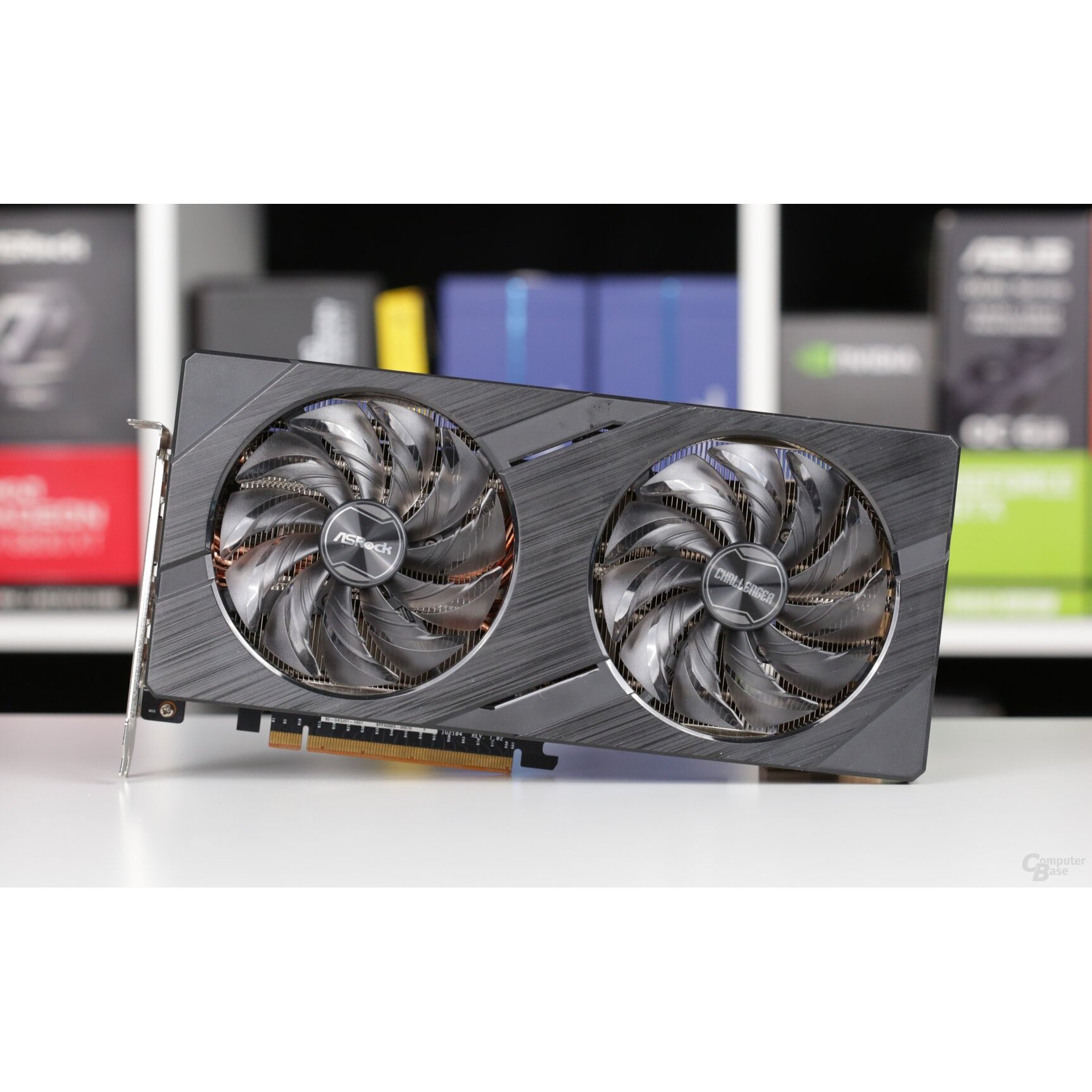
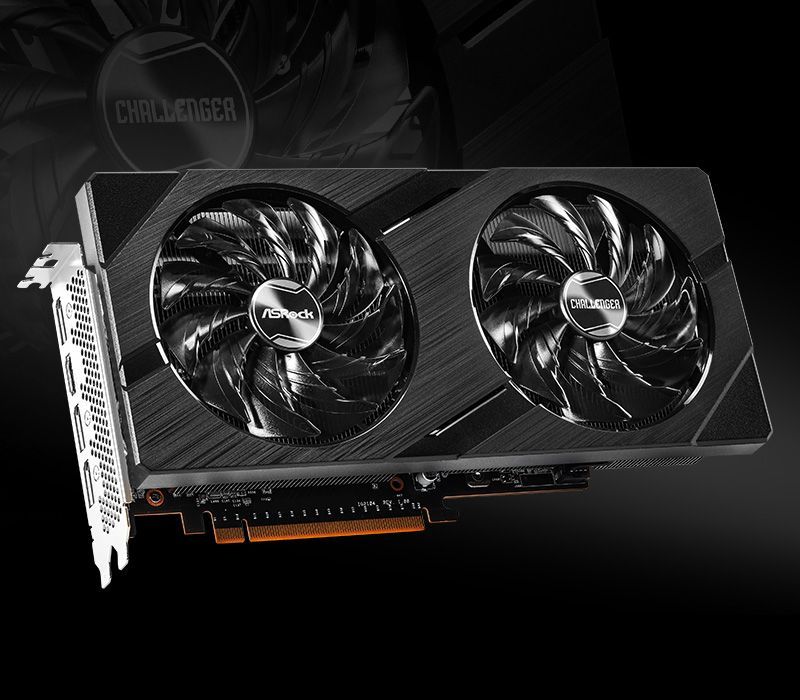
The ASRock Arc A580 Challenger represents the company’s custom-designed graphics card, marking the introduction of Intel’s latest and most compelling entry into the desktop GPU market. Priced disruptively, the new A580 Alchemist facilitates 1080p gaming at high enthusiast settings, while also supporting the complete DirectX 12 Ultimate feature set, which includes real-time ray tracing and XeSS performance enhancements. Given these attributes, along with its foundation on the modern 6 nm manufacturing process, the A580 qualifies as a current-generation GPU, aimed at attracting individuals who are new to the PC gaming arena, and it benefits from the reputable Intel brand.
Intel’s decision to introduce the A580 at this time, nearly a year following the launch of its Arc 7-series, can be attributed to two primary factors. Firstly, the prices of graphics cards have begun to stabilize, resulting in 1080p-class graphics cards being available at approximately. This situation allows Intel to competitively price the A580, effectively undercutting rivals such as the GeForce RTX 3050 and Radeon RX 6600. Secondly, Intel has made significant advancements over the past year in enhancing the software infrastructure of its Arc GPUs, which has enabled the company to elevate each product to a higher performance tier. These improvements include numerous game-specific optimizations and enhancements for APIs like DirectX 11 and DirectX 9, which remain pertinent for many popular e-sports games.
The Arc A580 is constructed upon the Xe-HPG Alchemist graphics architecture, representing Intel’s comprehensive initiative to develop a modern discrete GPU that rivals the latest offerings from GeForce RTX and Radeon RX in terms of features. This GPU is equipped with a real-time ray tracing engine that surpasses the technical capabilities of AMD’s equivalent, incorporating hardware acceleration for additional ray tracing stages, full asynchrony with ray tracing, and shader re-ordering. Additionally, the GPU includes XMX, a specialized matrix math accelerator, which positions these GPUs as formidable AI processing units. Intel capitalizes on this capability to enhance XeSS performance, achieving a level of technology comparable to DLSS 2.
Intel has developed the Arc A580 using the same 6 nm ACM-G10 silicon that drives the Arc 7 series. This new SKU features 24 of the 32 Xe Cores that are physically available on the silicon, distributed across 6 of the 8 Render Slices. This configuration results in a total of 384 execution units, equating to 3,072 unified shaders, 384 XMX cores, 24 Ray Tracing Engines, 192 Texture Mapping Units (TMUs), and 96 Render Output Units (ROPs).
A notable feature of the A580 is its identical memory sub-system to that of the A750. It is equipped with 8 GB of GDDR6 memory, utilizing a broad 256-bit memory bus. This configuration, combined with a memory speed of 16 Gbps, results in an impressive memory bandwidth of 512 GB/s, the highest within its market segment. Additionally, the A580 boasts a complete PCI-Express 4.0 x16 host interface, in contrast to its competitors, which typically offer limited Gen 4 x8 interfaces. This design ensures optimal performance on older PCIe Gen 3 platforms, such as the 10th Gen Core “Comet Lake” or Ryzen 2000, both of which support Resizable BAR, a feature essential for Arc GPUs to achieve their specified performance levels.
The Challenger series of graphics cards from ASRock has been recognized for its range of AMD Radeon offerings. These cards exemplify the company’s commitment to custom designs, featuring compact form factors, a cooling system designed for minimal noise, and ease of maintenance. Typically, their pricing aligns closely with the baseline for GPUs, which in this instance is set. The ASRock Arc A580 Challenger caters to users seeking a straightforward A580 solution that can be installed and left to operate without further concern.