Holidays Notice: Deliveries and customer support will be unavailable from June 24 to June 26. Operations will resume on June 27. Thank you for your understanding.
Holidays Notice: Deliveries and customer support will be unavailable from June 24 to June 26. Operations will resume on June 27. Thank you for your understanding.
Holidays Notice: Deliveries and customer support will be unavailable from June 24 to June 26. Operations will resume on June 27. Thank you for your understanding.
Holidays Notice: Deliveries and customer support will be unavailable from June 24 to June 26. Operations will resume on June 27. Thank you for your understanding.
Holidays Notice: Deliveries and customer support will be unavailable from June 24 to June 26. Operations will resume on June 27. Thank you for your understanding.
Holidays Notice: Deliveries and customer support will be unavailable from June 24 to June 26. Operations will resume on June 27. Thank you for your understanding.
Holidays Notice: Deliveries and customer support will be unavailable from June 24 to June 26. Operations will resume on June 27. Thank you for your understanding.
Holidays Notice: Deliveries and customer support will be unavailable from June 24 to June 26. Operations will resume on June 27. Thank you for your understanding.
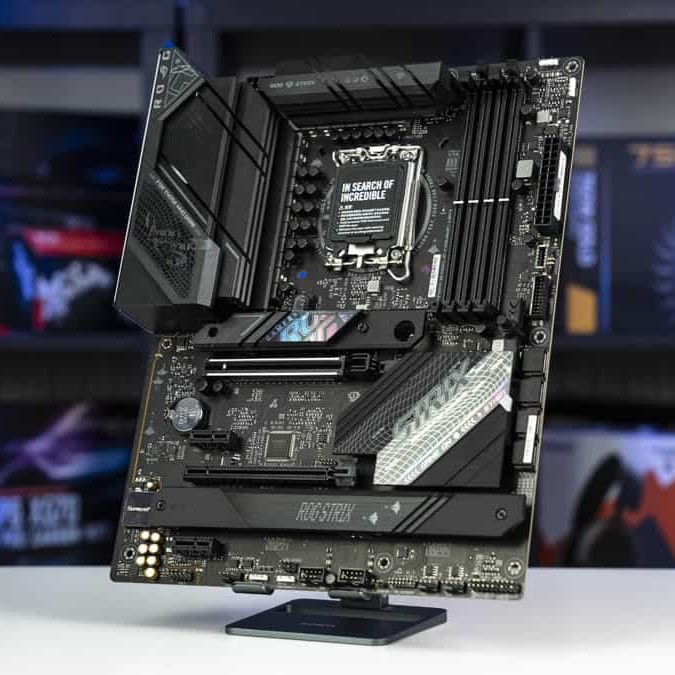
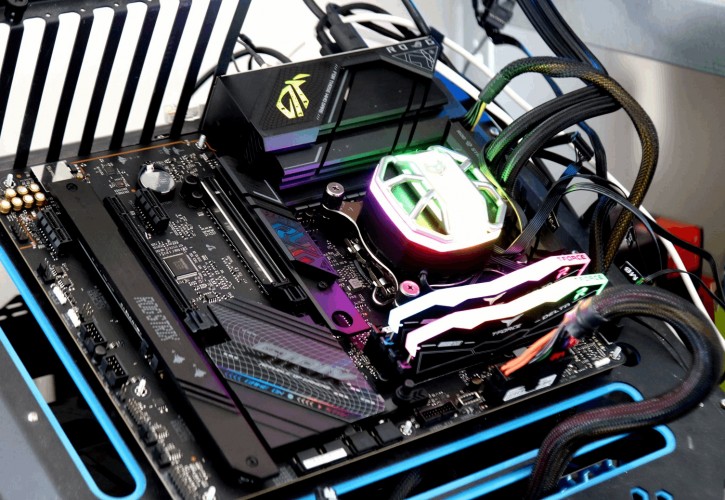
ASUS has officially unveiled the ROG STRIX B760 F-Gaming WIFI, a new motherboard tailored for gamers and technology enthusiasts. This motherboard is based on the Intel B760 chipset and is compatible with the latest 13th Generation Intel Core processors, making it an ideal option for those looking to construct a high-performance gaming PC or tackle demanding applications.
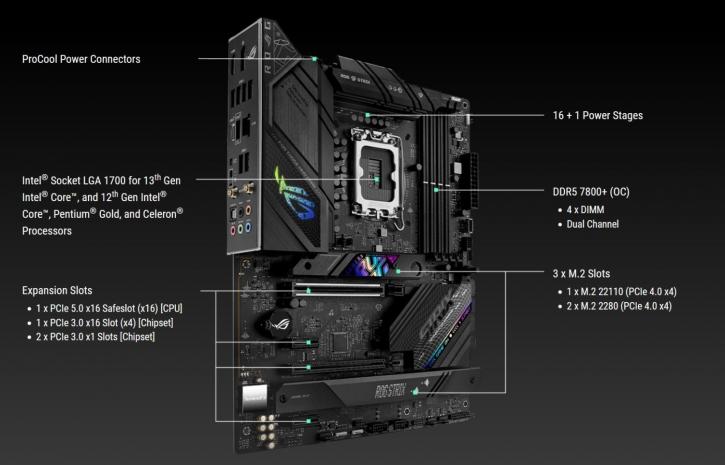
A notable feature of the ROG STRIX B760 F-Gaming WIFI is its capability to support high-speed memory, accommodating DDR5 memory with speeds reaching up to 7800 MHz, which significantly enhances performance for gaming and other memory-intensive tasks. Furthermore, the motherboard is equipped with various features aimed at improving the gaming experience. It includes a 2.5G Intel Ethernet port, ensuring a fast and stable internet connection for online gaming and data transfers. Additionally, it features an Intel WiFi 6E AX201 module for reliable wireless connectivity. Users can also enjoy customizable built-in Aura RGB lighting, allowing them to personalize the motherboard’s aesthetics.
The ROG STRIX B760 F-Gaming WIFI is designed with a robust 17 virtual phase power delivery system, ensuring stable and efficient power supply to the CPU. Its 16+1 power stage design guarantees effective power delivery, maintaining system stability even during overclocking. The motherboard also offers a wide range of connectivity options, including USB 3.2 Gen 2 and USB 2.0 ports, as well as various audio and video outputs such as HDMI and DisplayPort, facilitating easy connections to multiple displays via the processor’s integrated graphics. However, it is worth noting that this B series motherboard comes with a premium price tag of.
Cores
Cache
Clock Frequency /GHz
GPU
TDP
EUR
Core
Performance
Energy
L2
L3
Base P
Turbo P
Base E
Turbo E
Fashion model
Base
Turbo
Jan-23
i9-13900K
8
16
32MB
36MB
3
5.8
2.2
4.3
UHD 770
125W
253W
675
i9-13900KF
8
16
32MB
36MB
3
5.8
2.2
4.3
125W
253W
648
i9-13900
8
16
32MB
36MB
2
5.6
1.5
4.2
UHD 770
65W
219W
630
i9-13900F
8
16
32MB
36MB
2
5.6
1.5
4.2
65W
219W
601
i7-13700K
8
8
24MB
30MB
3.4
5.4
2.5
4.2
UHD 770
125W
253W
469
i7-13700KF
8
8
24MB
30MB
3.4
5.4
2.5
4.2
125W
253W
440
i7-13700
8
8
24MB
30MB
2.1
5.2
1.5
4.1
UHD 770
65W
219W
445
i7-13700F
8
8
24MB
30MB
2.1
5.2
1.5
4.1
65W
219W
415
i5-13600K
6
8
20MB
24MB
3.5
5.1
2.6
3.9
UHD 770
125W
181W
367
i5-13600KF
6
8
20MB
24MB
3.5
5.1
2.6
3.9
125W
181W
?338
i5-13600
6
8
11.5MB
24MB
2.7
5
2
3.7
UHD 770
65W
154W
294
i5-13500
6
8
11.5MB
24MB
2.5
4.8
1.8
3.5
UHD 770
65W
154W
267
i5-13400
6
4
9.5MB
20MB
2.5
4.6
1.8
3.3
UHD 730
65W
148W
255
i5-13400F
6
4
9.5MB
20MB
2.5
4.6
1.8
3.3
65W
148W
225
i3-13100
4
0
5MB
12MB
3.4
4.5
na
na
UHD 730
60W
89W
154
i3-13100F
4
0
5MB
12MB
3.4
4.5
na
na
58W
89W
125
The B760 chipset demonstrates commendable performance for both gaming and content creation. Benchmark evaluations indicate that it competes effectively with the higher-end Z790 chipset across numerous gaming scenarios, while also managing resource-intensive activities such as video editing and 3D rendering. It is important to highlight, however, that the B760 chipset has limitations in overclocking capabilities, primarily due to its more constrained VRM designs. Nevertheless, the B760 chipset represents a valuable addition to Intel’s range of chipsets, offering a well-rounded mix of performance and features tailored for mainstream and budget-oriented users. With this context established, let us delve deeper into the platform before proceeding to testing.